


2×2 Mica Sheet come in two mineral types of mica, Muscovite and Phlogopite. We can deliver both in rigid or flexible sheets, depending on what you intend to use them for. The standard size is 1000 × 1200 mm or 1000 × 2400 mm. Typically, mica's plate-like form lends itself to superior insulation and electrical and chemical resistance. These properties are especially useful when using mica in sheet form as a durable reinforcing agent.
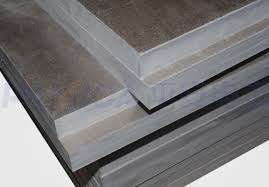
Mica sheet is produced from one of two minerals. The choice between them sets the electrical insulation performance, the maximum operating temperature and the chemical resistance of the finished sheet.
Muscovite
Muscovite mica
The mineral of choice where electrical insulation performance is the priority. Superior dielectric strength, low dielectric loss and outstanding electrical stability under high temperature. Used in high-voltage applications and precision electrical insulation.
Phlogopite
Phlogopite mica
The mineral of choice where thermal performance and chemical stability at elevated temperature are the priority. Higher continuous operating temperature than muscovite and better resistance to chemical attack at high temperature. Used in furnaces and heating elements.
Both minerals can be supplied as rigid or flexible sheet. The choice depends on whether the insulation must hold its own shape or conform to a curved surface.
Rigid Mica Sheet
Produced as rectangular board and sheet, rigid mica sheets have several crucial applications — from industrial furnace manufacturing to simple domestic appliances such as hairdryers. They are most suitable for furnace construction rather than for relining purposes. They are resistant to high-temperature cycles, making them well suited to electrically heated items such as automatic toasters, tumble dryers and band heaters.
Flexible Mica Sheet
Flexible sheet is used where the insulation must conform to a curved or irregular surface, where the part is wrapped around a conductor or element during installation, or where the sheet must be bent without cracking. It combines the same electrical and chemical resistance with the ability to follow complex geometry.
Two rigid grades are produced to cover the two temperature bands most commonly specified by furnace and heating element designers.
The higher-temperature grade. Used in the hottest parts of furnace construction and in high-temperature heating elements where the sheet must resist continuous extreme heat.
The standard grade. Used for general high-temperature electrical insulation, domestic appliance insulation and industrial equipment where the continuous temperature stays below 1000 °C.
Thickness and tolerance are the two figures that most often decide whether a mica sheet will fit the finished assembly. The table below covers the standard supply range.
Supply form: rectangular board and sheet. Sizes: 1000 mm widths, maximum 2400 mm lengths. Custom sizes are produced on request — send us the required length, width and thickness and we will confirm the achievable tolerance before quoting.
Mica sheets are used for high-performance thermal and electrical insulation in a broad range of industries — from heavy furnace construction down to domestic appliances.
Plate-like crystal structure
Mica's plate-like form lends itself to superior insulation and to electrical and chemical resistance. The layered crystal structure is what makes a thin sheet behave like a much thicker insulation barrier.
Outstanding electrical insulation under high temperature
Mica sheets provide outstanding electrical insulation under high temperatures. For this reason, mica sheets work well as insulation material where heat meets electrical current — the exact condition found in every heating element and furnace.
Resistant to high-temperature cycling
The sheet withstands the repeated heating and cooling cycles of an on-off heating element without losing its insulation performance — which is why it is the standard choice for automatic toasters, tumble dryers and band heaters.
Efficient, effective insulation reduces total cost
Efficient, effective insulation is vital to ensuring that the application operates at its best, safe and most cost-effective. A properly specified mica sheet reduces heat loss, protects the metal housing and extends the life of the heating element.
Two rigid grades cover the temperature range
MR SSP handles up to 1200 °C and MR SSM up to 1000 °C — so a single supplier covers the temperature requirements of both furnace construction and general high-temperature electrical insulation.
Q.01What is a mica sheet used for?
Mica sheet is used for high-performance thermal and electrical insulation in a broad range of industries: heating elements for electrical and thermo-mechanical equipment; construction of induction, arc and high-frequency furnaces; high-voltage applications; high thermal applications; and industrial sealing and gasket industries such as oil and gas distribution. It is also used in domestic appliances that combine heat and electrical current, such as hair dryers, automatic toasters, tumble dryers and band heaters.
Q.02What is the difference between muscovite and phlogopite mica sheet?
Muscovite and phlogopite are the two mineral types of mica used in sheet form. Muscovite generally offers higher electrical insulation performance and better dielectric strength; phlogopite offers better high-temperature resistance and better chemical stability at elevated temperature. Both are supplied as rigid or flexible sheet, and the choice depends on the maximum continuous operating temperature and the electrical insulation requirement of the application.
Q.03What rigid mica sheet grades are available?
Two rigid grades are produced. MR SSP has a heat resistance up to 1200 °C — the higher temperature grade, used in the hottest parts of furnace construction and high-temperature heating elements. MR SSM has a heat resistance up to 1000 °C — the standard grade for general high-temperature electrical insulation. Both are supplied as rectangular board or sheet.
Q.04What thicknesses and sizes are available?
Thickness ranges from 0.1 mm to 101.6 mm. Thickness tolerances are ±7% for 2–5 mm, ±5% for 5–30 mm and ±3% for 30–80 mm. Standard sheet sizes are 1000 × 1200 mm and 1000 × 2400 mm — maximum width 1000 mm and maximum length 2400 mm. Custom sizes can be produced on request.
Q.05Should I choose rigid or flexible mica sheet?
Rigid mica sheet is produced as rectangular board and sheet, and is most suitable for furnace construction rather than for relining purposes. It is used where the sheet must hold its shape and support a load — for example furnace lining boards, heating element supports and insulation barriers. Flexible mica sheet is used where the insulation must conform to a curved or irregular surface, and where the part must be wrapped or bent during installation.
Q.06Why does mica work so well as an insulation sheet?
Mica has a plate-like crystal form. This structure lends itself to superior insulation and to electrical and chemical resistance. These properties are especially useful when mica is used in sheet form as a durable reinforcing agent — it provides outstanding electrical insulation under high temperatures, which is why mica sheet works well where heat meets electrical current. It is also resistant to high-temperature cycling, making it suitable for electrically heated items that switch on and off.
Tell us the mineral type (muscovite or phlogopite), the form (rigid or flexible), the grade (MR SSP to 1200 °C or MR SSM to 1000 °C), the thickness, the sheet size and the quantity you need. If you are replacing an existing mica sheet, send us the current specification or drawing and we will match it.


